A Grand Korea Travel Route: Seoul, Gyeongju, Busan, Jeju, Jeonju and Baekje Heritage

Updated: Jul 28
Travel across Korea by train, road, and ferry — from royal palaces and ancient capitals to island landscapes, hanok villages, and Baekje heritage sites.
Many first-time visitors to Korea naturally think of a travel route that connects Seoul, Busan, and Jeju Island.
This is a very good route, of course. Seoul shows Korea’s capital city energy, Busan gives travelers a beautiful coastal atmosphere, and Jeju Island offers nature, volcanic landscapes, and a relaxing island mood.
But for travelers who have more time and want a deeper journey, Korea can also be enjoyed as one beautiful travel loop.
Instead of simply flying between major cities, this route connects Seoul, Gyeongju, Busan, Wando, Jeju Island, Jeonju, Gongju, Buyeo, and Seoul.
It is a journey that brings together Korea’s royal history, ancient kingdoms, coastal scenery, ferry travel, island nature, traditional hanok culture, and Baekje heritage.

A Different Way to Experience Korea
Most international travelers move from Busan to Jeju Island by domestic flight. It is simple, fast, and practical.
However, some travelers may enjoy a more local and scenic route by traveling from Busan to Wando, taking the ferry from Wando to Jeju Island, and then returning from Jeju Island to Wando before continuing to Jeonju, Gongju, Buyeo, and Seoul.
This gives the journey a very different feeling.
You are not just moving from one airport to another. You are crossing regions, seeing more of the countryside, and experiencing how Korea changes from city to coast, from island to inland heritage towns.
Please note that ferry routes in Korea can change depending on the season, weather, and operation status. The Busan–Wando ferry service is currently not operating, so this route is planned with the Wando–Jeju–Wando ferry connection instead.
Suggested Travel Flow
The route can be planned in this order:
Seoul → Gyeongju → Busan → Wando → Jeju Island → Wando → Jeonju → Gongju / Buyeo → Seoul
This is not a short city-hopping trip. It is better suited for travelers who want a more meaningful and slower journey across Korea.
A route like this may work well for travelers who have around 12 to 15 days in Korea, depending on their pace, hotel locations, ferry schedules, and sightseeing preferences.
Seoul: Korea’s Capital and Gateway
Seoul is usually the best starting point for a Korea journey.
The city offers a strong mix of old and new Korea. Travelers can visit royal palaces such as Gyeongbokgung Palace, walk through traditional areas like Bukchon Hanok Village or Insadong, and also enjoy modern neighborhoods such as Myeongdong, Hongdae, Gangnam, or COEX.
For many visitors, Seoul is the place where Korea first feels real.
There are palaces, shopping streets, cafes, street food, night views, museums, markets, and modern city life all in one place.
For a private tour, Seoul can also be adjusted depending on the traveler’s interests. Some may prefer history and culture, while others may want food, shopping, K-pop, local neighborhoods, or photography spots.
Gyeongju: The Ancient Capital of Silla
After Seoul, Gyeongju is one of the most important heritage cities in Korea.
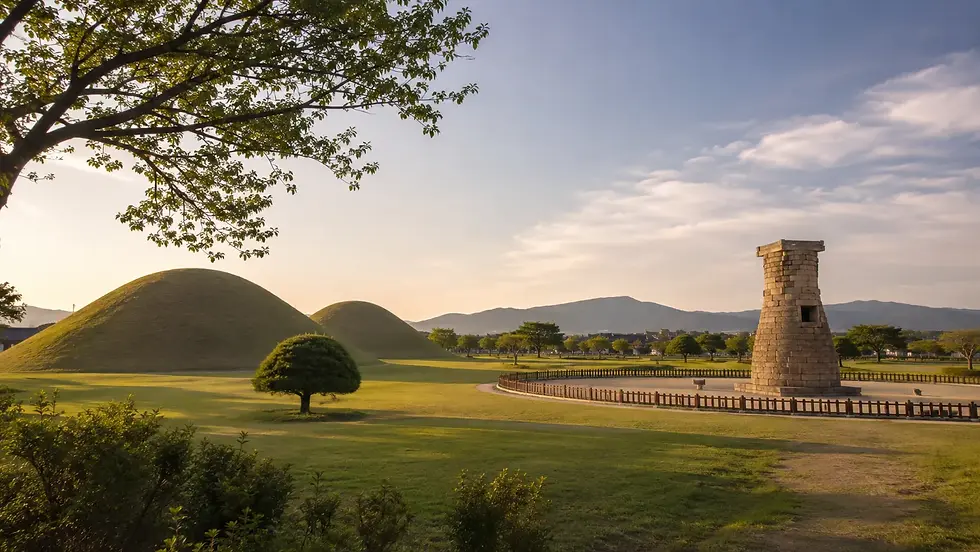
Gyeongju was the ancient capital of the Silla Kingdom, and it still feels very different from Seoul or Busan. The city is quieter, more historic, and full of cultural meaning.
Travelers can visit places such as Bulguksa Temple, Seokguram Grotto, Cheomseongdae Observatory, Daereungwon Tomb Complex, Donggung Palace and Wolji Pond, and the historic areas around Hwangridan-gil.
Gyeongju is often called “a museum without walls.”
For travelers interested in Korean history, Gyeongju is not just another stop. It is one of the key places that helps explain Korea’s ancient culture.

Busan: Coastal City Energy
From Gyeongju, travelers can continue to Busan.
Busan gives the route a completely different mood. It is Korea’s major southern port city, with beaches, bridges, seafood markets, coastal temples, and lively local neighborhoods.
Popular places may include Haeundae Beach, Gwangalli Beach, Gamcheon Culture Village, Jagalchi Market, BIFF Square, Songdo Marine Cable Car, and other coastal viewpoints.
Busan works well as a bridge between Korea’s ancient inland culture and the island journey to Jeju.
In a standard itinerary, many travelers would fly from Busan to Jeju Island. But in this extended route, Busan becomes the starting point for traveling by road toward Wando.
Busan to Wando: Crossing Southern Korea by Road
The journey from Busan to Wando is not just a simple transfer.
It takes travelers across the southern part of Korea, passing through changing landscapes, smaller cities, countryside areas, and coastal regions.
This part of the trip can be used as a travel day, or it can be adjusted with stops depending on timing and interest.
Wando is located in the southwestern coastal region of Korea. It is known as a gateway to island travel and ferry connections, especially for routes toward Jeju Island.
For travelers who enjoy slower, more local-style travel, this section can make the journey feel more connected and less like a standard airport-to-airport itinerary.
Wando to Jeju Island by Ferry
Taking the ferry from Wando to Jeju Island can be a memorable part of the trip.
The ferry journey gives travelers a different sense of arrival. Instead of landing at an airport, you approach Jeju from the sea.
Jeju Island already has a very unique character, and arriving by ferry can make the island feel even more special.
The ferry schedule, travel time, and availability should always be checked carefully before confirming the itinerary. Weather and sea conditions may also affect ferry operation.
For this route, the ferry section is planned as:
Wando → Jeju Island → Wando
This avoids relying on the currently suspended Busan–Wando ferry service and keeps the route more realistic.
Jeju Island: Nature, Volcanoes and Island Culture
Jeju Island is one of Korea’s most famous destinations, but it is also very different from the mainland.
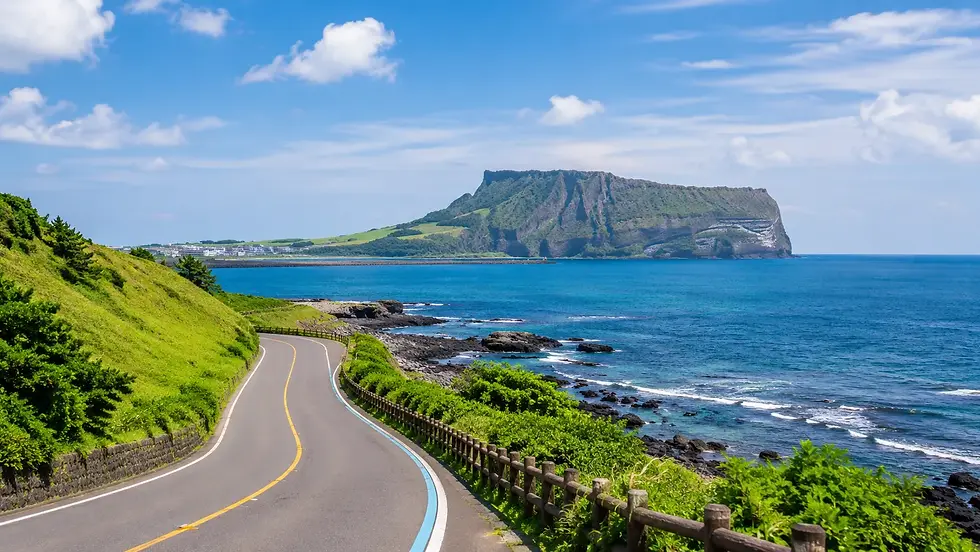
The island is known for volcanic landscapes, coastal roads, waterfalls, oreum hills, stone walls, local villages, and unique food culture.
Depending on the traveler’s pace, Jeju can be planned with highlights such as Seongsan Ilchulbong, Seopjikoji, Manjanggul area, Jeongbang Waterfall, Cheonjiyeon Waterfall, Hallasan viewpoints, coastal cafes, traditional markets, and local villages.
Jeju is also a good place to slow down.
After Seoul, Gyeongju, Busan, and the road journey to Wando, Jeju can give travelers a few days of nature, open space, and island scenery.
Returning from Jeju to Wando
After exploring Jeju Island, this route returns to Wando by ferry.
This return ferry is important because it connects the island section back to the mainland route.
From Wando, travelers can continue north toward Jeonju and then to Gongju or Buyeo before returning to Seoul.
This creates a full travel loop instead of a simple one-way trip.
It also makes the journey feel more like crossing Korea through different historical and cultural layers.
Jeonju: Hanok Village, Food and Local Culture
Jeonju is one of Korea’s most charming traditional cities.
It is especially known for Jeonju Hanok Village, where travelers can walk through traditional-style houses, small alleys, tea houses, craft shops, and local restaurants.
Jeonju is also famous for food, especially bibimbap and other local dishes.
Compared with Seoul or Busan, Jeonju feels slower and more traditional. It is a good place for travelers who want to experience Korean culture in a more relaxed way.
For many international visitors, Jeonju becomes one of the most memorable stops because it feels warm, walkable, and very Korean.

Gongju and Buyeo: Baekje Heritage
After Jeonju, the route can continue to Gongju and Buyeo.
These two areas are connected with the history of the Baekje Kingdom, one of Korea’s ancient kingdoms.
Gongju and Buyeo are quieter than Seoul, Gyeongju, or Busan, but they are very meaningful for travelers who want to understand Korea beyond the most famous tourist cities.
Possible places may include Gongsanseong Fortress, Tomb of King Muryeong, Baekje Cultural Land, Busosanseong Fortress, Jeongnimsa Temple Site, and other Baekje-related heritage areas.
This part of the route adds another historical layer.
Gyeongju introduces the Silla Kingdom, while Gongju and Buyeo introduce the Baekje Kingdom. Together, they help travelers see Korea as a country with many regional histories, not just one capital city story.
Returning to Seoul
The final section brings travelers back to Seoul.
This is useful for international departures from Incheon Airport, and it also gives travelers time to enjoy final shopping, a relaxed dinner, or one more Seoul experience before leaving Korea.
After completing this route, travelers will have seen much more than the standard highlights.
They will have experienced:
Seoul’s capital city energyGyeongju’s Silla heritageBusan’s coastal atmosphereWando’s ferry gatewayJeju’s island natureJeonju’s hanok culture and foodGongju and Buyeo’s Baekje heritage
This is not just a route from one city to another.
It is a journey through different faces of Korea.
Who Is This Route Good For?
This route may be a good choice for travelers who:
Have enough time for a deeper Korea journey
Want more than Seoul, Busan, and Jeju
Enjoy history, culture, nature, and regional food
Prefer a private and flexible travel style
Are interested in ferry travel and scenic movement
Want to experience both famous places and quieter heritage regions
It may not be the best route for travelers who want a very fast and simple trip.
For a shorter journey, flying between Seoul, Busan, and Jeju may be more practical.
But for travelers who want a richer and more connected experience, this route can be a beautiful way to discover Korea.
Important Travel Note
Transportation in Korea is generally reliable, but ferry routes require extra care.
Ferry schedules can change because of season, weather, sea conditions, maintenance, or operation status.
For this reason, the exact order and transportation method should be checked again when planning the final itinerary.
At K-STAR TRAVEL, we usually design this type of route as a flexible private journey. The route can be adjusted depending on travel dates, hotel locations, ferry schedules, luggage, walking pace, and personal interests.
Final thought
Korea is a small country compared with many other travel destinations, but it has a surprisingly wide variety of landscapes, histories, and local cultures.
A trip from Seoul to Gyeongju, Busan, Jeju, Jeonju, Gongju, Buyeo, and back to Seoul can show travelers a much deeper side of the country.
It is a route for travelers who want to go beyond the most common travel path.
From royal palaces to ancient capitals, from coastal roads to island ferries, from hanok villages to Baekje heritage sites, this journey brings together many of Korea’s most meaningful travel experiences in one memorable loop.